
Why I won’t be importing roses for Valentine’s Day
When you think of Valentine’s you think of roses but, in the UK, roses are not in season until late May. This means the industry relies on buying and importing thousands of roses from countries such as Kenya and Columbia. That alone is a huge environmental cost before we even think about the chemical inputs or carbon footprint.
What is the environmental impact?
Every February, an estimated 570 tonnes of roses are shipped to the UK. During this journey, they will have travelled thousands of miles, wrapped in non-recyclable cellophane and kept cool in refrigerated containers.
In fact, a typical valentine’s bouquet of 12 Kenyan red roses has emitted 75kg of CO₂ compared to a local, seasonal bouquet from the UK emitting around 1.4kg of CO₂.
A regular imported bouquet will emit approximately 35kg of CO₂.
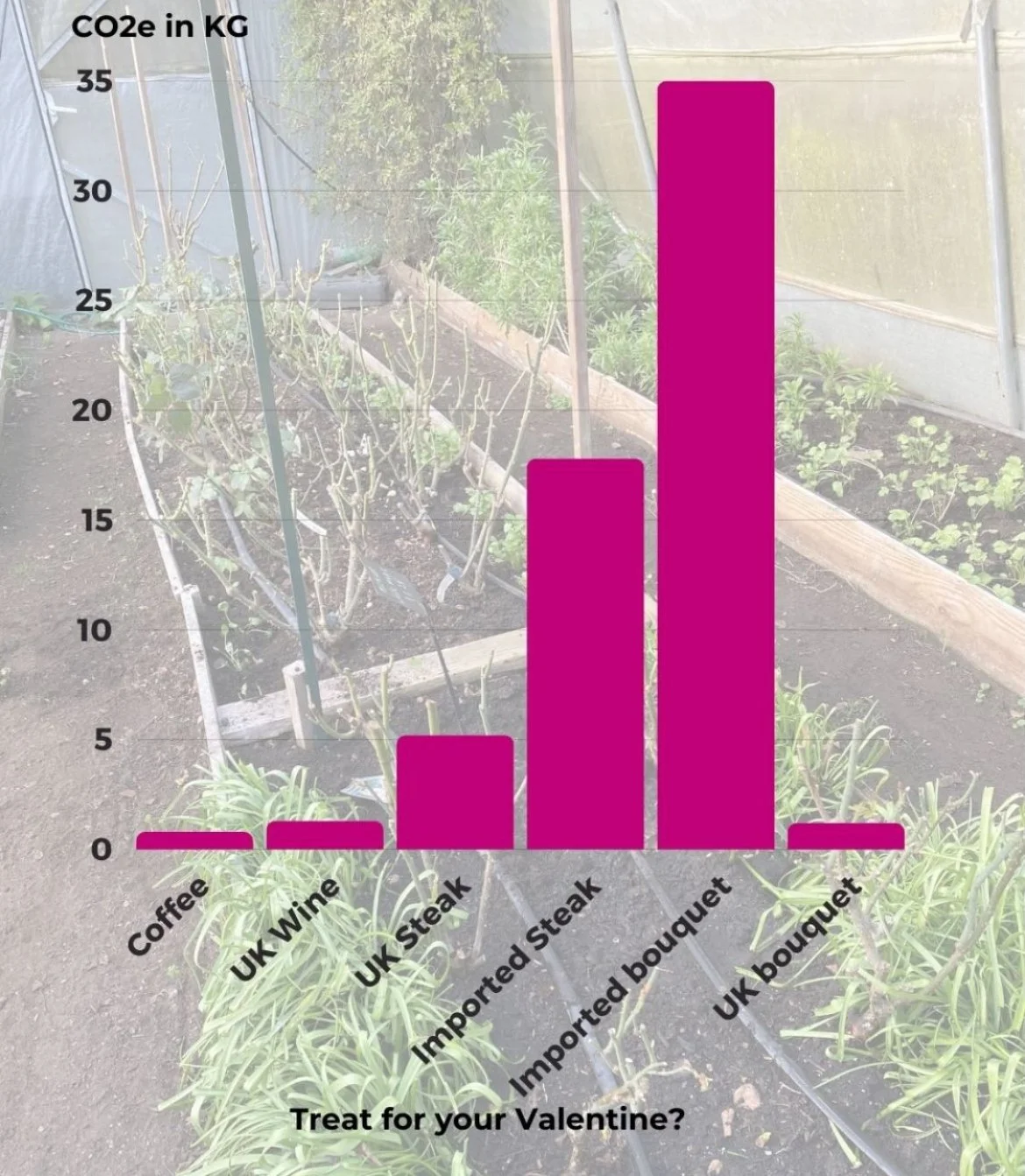
Graphic from Claire @ Plant Passion. Data from How Bad Are Bananas? by Mike Berners-Lee
Even though Kenya’s climate means roses can grow with far lower energy use than Dutch hot‑house roses, the biggest environmental issue is the timing. Flying refrigerated flowers into the UK just for a single peak holiday creates a carbon spike that far outweighs the footprint of choosing something seasonal.
Rose farms abroad also rely heavily on pesticides to meet the cosmetic standards expected of imported flowers, with Colombia using around 200kg of pesticides per hectare. In Kenya, invasive pests like the false codling moth have pushed farms to use stronger chemical treatments, and entire shipments can be rejected if a single larva is detected.
Roisin Taylor a fellow flower grower and Nuffield farming scholar visited a number of Kenyan rose plantations as part of her research. She shared that even in one of the highest quality farms she visited, they are adding nitrogen fertilizers to the roses every single day. This is in addition to the large volumes of pesticides.
It’s also important to add that many of these countries don’t follow the same pesticide laws as the UK and this has led to a number of florists raising concerns of the impact of imported flowers on their health.
Seasonality of flowers and food is gaining momentum and if you’d like to read more about the impact of importing roses I recommend visiting https://www.ssawcollective.com/
Alternatives to roses for Valentine’s Day
Although roses are beautiful, the environmental impact of importing them doesn’t really scream romance. So, what is the alternative? February might not bring roses to British fields, but it brings some of the most magical stems of the year: jewel‑toned anemones, romantic ranunculus, scented narcissi, early tulips and beautifully textural foliage. These flowers haven’t flown thousands of miles, they haven’t sat in refrigerated storage, and they support British growers who work with the seasons rather than against them.
This year, I will be offering bouquets of British grown tulips from a family business based in Lincolnshire. I will also be offering pre-order mixed bouquets using British grown foliage and flowers including anemones and ranunculus. They’re fresher, lower-carbon and filled with real character. A much lovelier symbol of love than something flown halfway around the world.
Get in touch to order yours now!